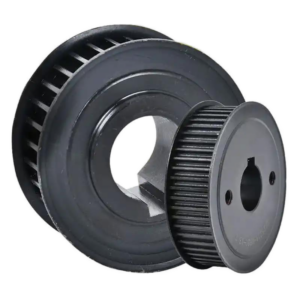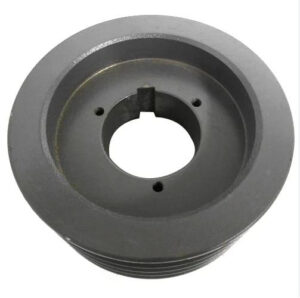
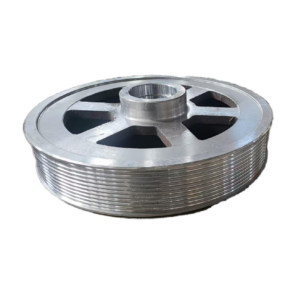
Pulley systems, one of humanity’s oldest mechanical inventions, continue to play a critical role in modern engineering. However, recent advancements in materials science, digitalization, and sustainability are reshaping their design, functionality, and applications. This article explores the cutting-edge innovations transforming traditional pulleys into intelligent, high-performance components.
1. Advanced Materials and Lightweight Design
The use of composite materials, such as carbon fiber-reinforced polymers and high-strength alloys, has significantly reduced pulley weight while enhancing durability. These materials offer superior resistance to corrosion, wear, and extreme temperatures, making them ideal for aerospace, automotive, and renewable energy systems. Additive manufacturing (3D printing) further allows for complex, topology-optimized designs that minimize material use without compromising strength.
2. Smart Pulleys with Embedded Sensors
The integration of IoT (Internet of Things) technology has given rise to “smart pulleys” equipped with embedded sensors. These sensors monitor real-time data such as tension, rotational speed, temperature, and vibration. By transmitting this data to centralized control systems, smart pulleys enable predictive maintenance, reducing downtime and preventing catastrophic failures in industries like manufacturing, mining, and logistics.
3. Energy Efficiency and Noise Reduction
Modern pulley designs focus on maximizing energy efficiency through optimized groove profiles and surface coatings. For instance, laser-textured or polymer-coated sheaves reduce belt slippage and friction, lowering energy consumption. Additionally, noise-dampening materials and precision balancing techniques have made pulley systems quieter, meeting stringent environmental and workplace regulations.
4. Applications in Renewable Energy and Robotics
Pulley systems are vital in renewable energy infrastructure, particularly in solar tracking systems and wind turbine pitch control mechanisms. In robotics, lightweight and high-precision pulleys are essential for articulated arms, drones, and exoskeletons, where accuracy and reliability are paramount. Magnetic or non-contact pulley systems are also being developed for cleanroom and high-speed applications where contamination must be avoided.
5. Digital Twins and Simulation-Driven Development
Engineers now use digital twin technology to simulate pulley performance under various operational conditions. By combining CAD (Computer-Aided Design) with finite element analysis (FEA) and computational fluid dynamics (CFD), designers can predict wear patterns, stress distribution, and thermal effects, accelerating development cycles and improving product longevity.
6. Sustainability and Circular Economy
End-of-life considerations are increasingly influencing pulley design. Manufacturers are adopting recyclable materials and modular designs that allow for easy disassembly and component reuse. Furthermore, belt-and-pulley systems are being optimized to work with biodegradable lubricants, supporting greener industrial practices.
Conclusion
From ancient wooden wheels to today’s sensor-equipped, composite-built components, pulley systems have undergone a remarkable technological evolution. As industries embrace automation, energy conservation, and data-driven operations, pulleys will continue to adapt, proving that even the simplest machines can achieve sophistication through innovation. The future of pulley technology lies in seamless integration with smart ecosystems, contributing to safer, more efficient, and sustainable engineering solutions.