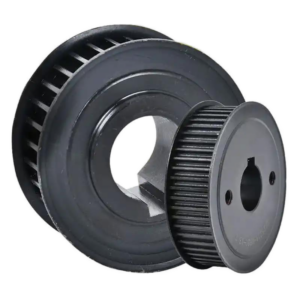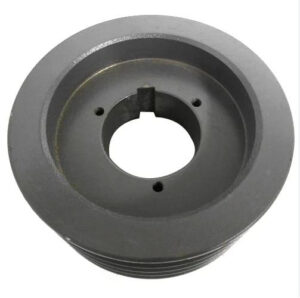
Belt drive systems remain a widely used, reliable, and cost-effective method for power transmission in industrial and commercial applications. Using pulleys and V-belts (or timing belts) to connect a prime mover—like an electric motor or engine—to driven equipment such as generators and vacuum pumps offers distinct advantages. This article explores the key considerations, benefits, and maintenance practices for these setups.
How It Works: The Basic Principle
The system consists of two pulleys: one attached to the driver shaft (the motor/engine) and one to the driven shaft (the generator or vacuum pump). An endless belt loops around both pulleys, transmitting power through friction (V-belts) or positive engagement (timing belts). The speed ratio between the driver and driven equipment is determined by the relative diameters of the pulleys.
Speed Ratio Formula:
Driven Shaft Speed (RPM) = Driver Shaft Speed (RPM) × (Driver Pulley Diameter / Driven Pulley Diameter)
This simple ratio is the core of system design. To increase the speed of a generator or pump, a larger driver pulley or a smaller driven pulley is used, and vice versa.
Application-Specific Considerations
1. For Generators:
When an engine drives a generator, the generator’s input shaft must rotate at its precise rated speed (e.g., 1500 or 1800 RPM for 50Hz/60Hz output) to maintain correct electrical frequency (Hz). Belt drives offer flexibility in engine placement and allow easy adjustment of the pulley ratio to achieve this exact speed, regardless of the engine’s optimal RPM. They also provide a measure of vibration damping between the engine and the sensitive generator rotor.
Key Design Point: The system must be designed to handle the full load torque of the generator without slip, ensuring consistent frequency under varying electrical loads.
2. For Vacuum Pumps:
Vacuum pumps (e.g., rotary vane, piston pumps) often require specific operating speeds for optimal performance and longevity. Belt drives allow a standard motor to be matched to the pump’s required speed. They also isolate the motor from potential heat or vibration from the pump.
Key Design Point: For high-torque applications like positive displacement pumps, selecting belts with adequate power transmission capacity and proper tension is critical to prevent slippage, which would reduce vacuum level.
Advantages of Belt Drive Systems
- Flexibility: Easy to modify speed ratios by changing pulley sizes. Allows for versatile equipment layout as the driver and driven unit need not be perfectly aligned axially.
- Shock Absorption: Belts dampen shock loads and vibrations, protecting both the motor and the driven equipment (especially beneficial for generators).
- Overload Protection: In case of a jam or severe overload, belts may slip or break, acting as a simple mechanical fuse that prevents more costly damage.
- Cost-Effectiveness: Lower initial cost compared to direct-coupled gear drives and simpler to install and maintain.
- Noise Reduction: Generally quieter than direct gear drives.
Essential Components & Maintenance
- Belt Type: V-belts are common for general purposes. Multiple V-belts or banded belts are used for higher power. Timing belts provide non-slip, synchronized power transfer, crucial for applications requiring absolute speed consistency.
- Pulleys: Must be correctly sized, properly aligned, and have grooves that match the belt profile. Misalignment is a leading cause of premature belt wear.
- Tensioning: Proper belt tension is vital. Insufficient tension causes slippage, efficiency loss, and heat buildup. Excessive tension overloads bearings, leading to premature failure. Use a tension gauge or the recommended deflection method.
- Regular Maintenance:
- Inspect belts regularly for cracks, glazing, fraying, or wear.
- Check and correct pulley alignment periodically.
- Monitor and adjust belt tension as needed (new belts require re-tensioning after a short run-in period).
- Ensure the drive guard is securely in place for safety.
When to Consider Alternatives
While highly versatile, belt drives may not be suitable for all scenarios. Direct coupling or gear drives might be preferred where:
- Absolute, zero-maintenance alignment is required.
- Space is extremely limited.
- Extremely high torque or efficiency is needed with no tolerance for slip.
Conclusion
Belt and pulley systems offer a practical, adaptable solution for driving generators and vacuum pumps. Their success hinges on correct initial design—selecting the right pulley ratio, belt type, and size for the power requirement—combined with a consistent routine of alignment checks and tension maintenance. By understanding these principles, operators can ensure reliable, efficient, and long-lasting operation for their critical power generation and vacuum systems.