
Transmission components play a vital role in mechanical systems. Their main function is to transfer power, torque, and motion from one part of a machine to another. They are widely used in industrial equipment, construction machinery, automobiles, mining machines, and many other mechanical systems. Proper selection of transmission components can improve efficiency, reliability, and service life of equipment.
1. Gear Transmission Components
Gears are one of the most common transmission components. They transfer motion and torque through the meshing of gear teeth.
Common types of gears include:
- Spur gears – Used for parallel shafts and simple transmission systems.
- Helical gears – Provide smoother operation and higher load capacity.
- Bevel gears – Used to transmit motion between intersecting shafts.
- Planetary gears – Compact systems capable of transmitting high torque.
Function:
Gears are mainly used to change speed, torque, and direction of rotation. They provide accurate and reliable power transmission.
2. Couplings
Couplings are mechanical devices used to connect two shafts together in order to transmit power.
Common types include:
- Rigid couplings
- Flexible couplings
- Gear couplings
- Rubber insert couplings
Function:
Couplings transmit torque between shafts while compensating for slight misalignment, vibration, or shock in the system.
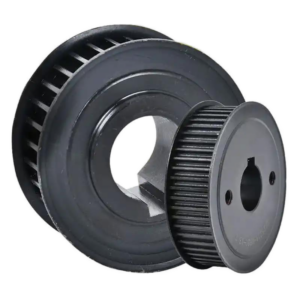
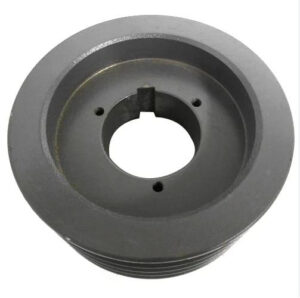
3. Belt and Pulley Systems
Belt drives use belts and pulleys to transmit motion between shafts that may be far apart.
Common belt types include:
- V-belts
- Timing belts
- Flat belts
Function:
They provide smooth and quiet transmission and can absorb vibration. Belt drives are widely used in light and medium-duty machinery.
4. Chain Transmission Components
Chain drives use chains and sprockets to transfer motion and power.
Function:
Chain transmission provides high efficiency and can transmit power over longer distances without slipping. It is commonly used in conveyors, motorcycles, and industrial machinery.
5. Bearings
Bearings support rotating shafts and reduce friction between moving parts.
Common types include:
- Ball bearings
- Roller bearings
- Tapered roller bearings
Function:
Bearings ensure smooth rotation, reduce wear, and increase the service life of machinery.
6. Bushings and Hubs
Bushings and hubs are used to connect transmission components such as pulleys, sprockets, or gears to shafts.
Function:
They help achieve secure mounting, accurate positioning, and easier installation or replacement of transmission parts.
Conclusion
Transmission components are essential elements in mechanical systems. Different types of components—such as gears, couplings, belts, chains, and bearings—work together to transfer power efficiently and reliably. Understanding their classification and functions helps engineers select the right components for different applications, improving machine performance and durability.