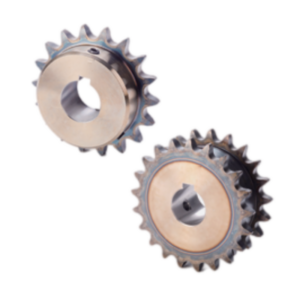
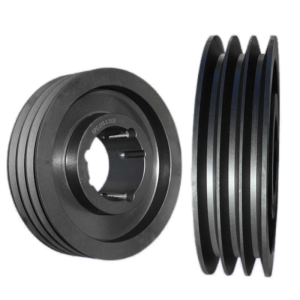
1. Transmission Belt Pulley
Function:
Transfers power between shafts using a belt (V-belt, flat belt, timing belt, etc.).
Common Materials:
| Material | Typical Use | Characteristics |
|---|---|---|
| Cast Iron (e.g., FG200, GG20) | Most common in industrial pulleys | Good wear resistance, damping capacity, machinability, and cost-effective. |
| Steel (Carbon or Alloy Steel) | Heavy-duty or high-speed applications | High strength, impact resistance, and durability. Often used when dynamic load is high. |
| Aluminum Alloy | Light-duty, precision machinery | Lightweight, corrosion-resistant, easy to machine, good for speed-sensitive or small equipment. |
| Plastic / Polymer (e.g., Nylon, Polyurethane) | Small power transmissions, lightweight systems | Lightweight, quiet operation, corrosion-resistant, but lower strength and temperature limits. |
| Cast Aluminum or Zinc Alloy (Die-cast) | Automotive and small equipment | Combines light weight and decent strength. |
2. Coupling
Function:
Connects two shafts to transmit torque while accommodating misalignment, vibration, or shock.
Common Materials:
| Material | Typical Coupling Types | Characteristics |
|---|---|---|
| Carbon Steel / Alloy Steel | Rigid, gear, and chain couplings | Very strong and wear-resistant; suitable for high torque or heavy-duty service. |
| Stainless Steel (e.g., SS304, SS316) | Flexible and precision couplings in harsh environments | Corrosion-resistant; used in food, chemical, or marine applications. |
| Cast Iron | Flange and rigid couplings | Cost-effective, good vibration damping, but brittle under shock. |
| Aluminum Alloy | Jaw, beam, or servo couplings | Lightweight and corrosion-resistant; ideal for precision machinery or robotics. |
| Bronze / Brass | Specialty couplings | Good friction and wear properties; used in low-speed or high-corrosion areas. |
| Engineering Plastics (e.g., Nylon, Polyurethane, Delrin) | Flexible, spider, or insert couplings | Absorb shock and vibration well, low noise, and lightweight. |