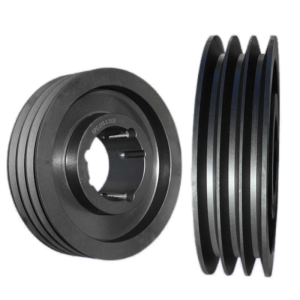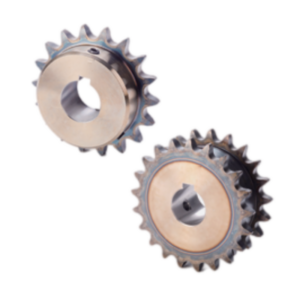
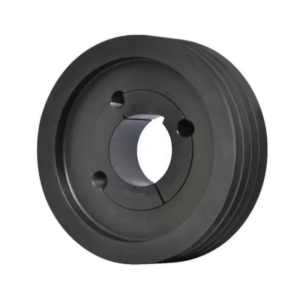
In mechanical power transmission systems, the connection between a pulley and its shaft is fundamental to efficient and reliable operation. Taper bushings, often simply called “taper locks” or “cone bushings,” have become the industry-preferred solution for mounting pulleys, sprockets, and couplings onto shafts. This article explores the design, advantages, and applications of the taper bushing and pulley system.
1. The Design Principle
The core of the system is a taper bushing—a precision-machined, flanged sleeve with a tapered outer surface and a straight inner bore. It is paired with a pulley (or other component) that has a matching tapered hub. The assembly typically includes two sets of screws: cap screws to draw the bushing into the pulley’s taper, and grub screws to secure the entire assembly to the shaft.
The magic lies in the taper. As the cap screws are tightened, the bushing is pulled axially into the pulley’s tapered recess. This creates a powerful dual-action clamping force:
- Radially: The bushing compresses uniformly onto the shaft.
- Axially: The tapered interface creates a immense locking pressure between the bushing, pulley, and shaft.
The result is a keyless, rigid, and concentric connection that eliminates backlash and fretting corrosion.
2. Key Advantages Over Traditional Methods
Compared to traditional keyed and set-screw mounts, the taper bushing system offers significant benefits:
- Simplified Installation and Removal: No need for heavy pressing, heating, or hammering. Standard hex keys are sufficient, drastically reducing downtime during maintenance or size changes.
- Precise and Repeatable Positioning: The bushing ensures the pulley is mounted perfectly perpendicular to the shaft, promoting balance and reducing vibration. It can be easily repositioned for timing or tension adjustments.
- Reduced Stress Concentration: Unlike a keyway, which creates a point of high stress, the taper bushing distributes clamping force evenly along the shaft. This minimizes the risk of shaft fatigue and failure.
- Excellent Grip and Zero Backlash: The immense friction grip provides superior torque transmission without slippage, even under heavy loads, shock, or reversing directions.
- Shaft Compatibility: A single bushing size can accommodate a small range of shaft diameters, reducing inventory needs. It also protects the shaft from wear, as all locking force is applied to the disposable bushing, not the shaft itself.
- Versatility: The system is standardized. The same bushing type can be used with pulleys (V-belt, timing, flat), sprockets, gears, and couplings from various manufacturers.
3. Common Applications
Taper bushing and pulley systems are ubiquitous in industries requiring robust and adjustable power transmission:
- Conveyor Systems: For driving rollers and head pulleys.
- Agricultural Machinery: In combines, tractors, and irrigation pumps.
- Industrial Fans and Blowers: For secure mounting of large, balanced fan pulleys.
- Processing Equipment: In mixers, crushers, and extruders subject to variable loads.
- HVAC Systems: On drive pulleys for large ventilation fans.
4. Selection and Maintenance Considerations
Proper selection involves matching the bushing number (e.g., 1008, 2517) to both the pulley’s taper bore and the shaft diameter. Correct installation torque for the screws is critical to achieve the designed clamping force without damaging the threads.
Maintenance is straightforward: periodically check screw tightness (especially after initial run-in) and inspect for signs of wear, corrosion, or damage. The sacrificial nature of the bushing means only an inexpensive component needs replacement if wear occurs, preserving the more costly pulley and shaft.
Conclusion
The taper bushing is a deceptively simple component that revolutionized shaft mounting. By providing a keyless, high-strength, and user-friendly connection, the taper bushing and pulley combination ensures reliability, safety, and efficiency in countless mechanical drives. Its continued dominance in engineering is a testament to its elegant design and proven performance in the real world.