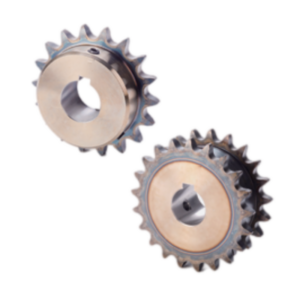
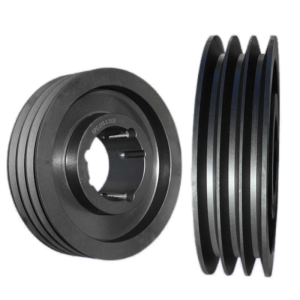
The Silent Revolution: How New Materials are Redefining Gears and Pulleys
For centuries, the fundamentals of power transmission have remained unchanged. Gears mesh, belts grip pulleys, and rotational force is transferred from one shaft to another. These components are the unsung heroes of industry, found in everything from car engines and conveyor belts to wind turbines and precision watches. However, while their geometry has been perfected over decades, a quiet revolution is underway beneath the surface. The true frontier of innovation in power transmission is no longer just shape, but substance. Advanced materials are fundamentally transforming what gears and pulleys can do.
For too long, the material choices were limited: steel for high strength, cast iron for durability, brass for corrosion resistance, or nylon for quiet operation. Each came with a trade-off. Steel is heavy and requires lubrication, nylon lacks high-temperature strength, and metals are prone to corrosion. The demands of modern engineering—lightweighting, energy efficiency, maintenance-free operation, and extreme environment performance—are rendering these traditional materials insufficient.
Enter the new generation of engineering materials.
1. High-Performance Polymers and Composites
Beyond standard nylons and acetals, advanced polymers are making significant inroads.
- PEEK (Polyether Ether Ketone) and PEKK (Polyether Ketone Ketone): These high-temperature thermoplastics are game-changers. They offer exceptional mechanical strength, excellent wear and friction characteristics, and can operate continuously at temperatures exceeding 250°C. This makes them ideal for aerospace, automotive, and oil & gas applications where metal gears would require heavy lubrication systems or fail altogether. Their inherent lubricity also allows for “dry-running,” eliminating the need for oil or grease, which is a critical advantage in food, pharmaceutical, and cleanroom environments.
- Carbon Fiber and Aramid Reinforced Composites: By embedding fibers like carbon or aramid (Kevlar) into a polymer matrix, manufacturers can create gears and pulleys that are incredibly strong and stiff, yet up to 70% lighter than their steel counterparts. This weight reduction is crucial for applications like robotics and aerospace, where reducing rotational mass lowers inertia, saves energy, and allows for faster acceleration and deceleration.
2. Advanced Metal Alloys and Treatments
Metallurgy is not standing still. New alloys and surface engineering techniques are pushing the limits of metal-based components.
- Powder Metallurgy (PM) Steels: PM allows for the creation of complex, near-net-shape gears with highly controlled porosity. This porosity can be infiltrated with oil, creating self-lubricating “oil-filled” gears that require no external lubrication for their entire service life.
- Additive Manufacturing (3D Printing) Alloys: For highly customized or topology-optimized gears, 3D printing with metals like titanium (Ti-6Al-4V) or maraging steel enables designs that are impossible to create with traditional machining. These designs can be hollowed and strengthened only where needed, resulting in ultra-lightweight yet robust components.
- Advanced Surface Coatings: Diamond-Like Carbon (DLC) coatings and other physical vapor deposition (PVD) treatments can be applied to gear teeth and pulley grooves. These ultra-hard, low-friction coatings drastically reduce wear, minimize noise, and improve efficiency, effectively giving a steel component the surface properties of a much more advanced material.
3. Hybrid and Smart Materials
The future lies in integration and intelligence.
- Metal-Polymer Hybrids: Imagine a pulley with a lightweight, corrosion-free polymer core and a high-wear metal groove insert. Or a gear made of a composite body with metal teeth inserts. These hybrid approaches allow engineers to strategically place materials only where their specific properties are needed, optimizing performance, weight, and cost.
- Embedded Sensors: With the rise of the Industrial Internet of Things (IIoT), materials are becoming “smart.” It’s now possible to embed microscopic fiber-optic sensors or RFID tags within a composite gear during molding. These sensors can monitor real-time parameters like torque, temperature, and stress, enabling predictive maintenance and preventing catastrophic failures.
The Impact: A Lighter, Quieter, More Efficient Future
The shift to advanced materials delivers tangible benefits across all industries:
- Energy Efficiency: Lighter components with lower friction coefficients directly translate to reduced power consumption in motors and engines.
- Durability and Maintenance: Components that resist wear, corrosion, and can run without lubrication dramatically extend service intervals and reduce downtime.
- Performance: Reduced inertia allows for higher speeds and more dynamic motion control, essential for advanced robotics and automation.
- Design Freedom: New materials enable smaller, more compact, and more creatively optimized transmission systems.
Conclusion
Gears and pulleys are no longer just pieces of shaped metal or plastic. They are highly engineered systems where material science is as critical as mechanical design. The ongoing innovation in polymers, composites, metal alloys, and hybrid structures is breaking the old paradigms of performance trade-offs. As these new materials become more accessible and manufacturing techniques like 3D printing evolve, we can expect the humble gear and pulley to continue their silent revolution, driving the machines of the future with unprecedented efficiency, intelligence, and reliability. The power transmission landscape is being reshaped, one molecule at a time.