In the world of mechanics, where gears and motors often steal the spotlight, the humble sprocket performs a critical, relentless duty. It is the essential interface between rotary motion and a chain, a simple yet brilliantly effective component that drives everything from bicycles to industrial conveyor systems. This article delves into what a sprocket is, how it works, its key design parameters, and where it proves indispensable.
What is a Sprocket?
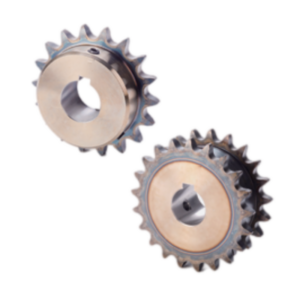
A sprocket is a profiled wheel with teeth, or cogs, designed to mesh with a chain, track, or other perforated or indented material. Unlike a gear, which meshes directly with another gear, a sprocket always engages with a chain, creating a positive-drive system with minimal slippage. This relationship forms the basis of chain drive systems, renowned for their efficiency, durability, and ability to transmit power over relatively long distances.
How Does a Sprocket Work?
The principle is elegantly simple:
- Engagement: The sprocket’s teeth insert into the gaps (rollers) of the chain.
- Power Transfer: As the driving sprocket (on the motor or engine shaft) rotates, it pulls the chain along.
- Transmission: The moving chain then rotates a second, driven sprocket (on the wheel or machine shaft), transferring power and motion.
- Tension: A correctly tensioned chain ensures smooth engagement and disengagement, preventing the chain from jumping off the teeth.
Key Design Parameters & Terminology
Understanding a sprocket’s specification is crucial for selection and replacement. Here are the critical dimensions:
- Pitch (P): The most important dimension. It is the distance between the centers of two adjacent pins on the chain, measured in inches or millimeters. The sprocket pitch must match the chain pitch exactly. Common pitches include ¼”, ½”, and 19.05 mm.
- Pitch Diameter (PD): The diameter of the circle on which the chain pins “sit” when wrapped around the sprocket. It determines the sprocket’s effective size and rotational speed ratio.
- Number of Teeth (N): Directly affects speed, torque, and smoothness. A driving sprocket with fewer teeth than the driven sprocket will reduce speed and increase torque (reduction drive).
- Bore: The central hole that mounts the sprocket onto a shaft. It may include keyways, set screws, or other locking features.
- Hub Diameter & Width: The hub provides structural strength and offset. Total width must accommodate the chain being used.
Types of Sprockets
Sprockets are designed for specific chains and functions:
- Roller Chain Sprockets: The most common type, used with ANSI standard roller chains in machinery, motorcycles, and bicycles.
- Idler Sprockets: Used to guide a chain, take up slack, or change its direction of travel. They are not driven and often have no bore.
- Double-Pitch Sprockets: Have teeth spaced at twice the standard chain pitch, used in slower conveyor systems.
- Split Sprockets: Made in two halves for easy installation and removal without dismantling entire shafts or machinery.
- Taper-Lock Sprockets: Feature a bushing system for a secure, tool-free fit onto a shaft, allowing easy swapping of sizes.
Common Applications
Sprockets are ubiquitous in power transmission and conveyance:
- Transportation: Bicycles, motorcycles, go-karts, and automotive timing systems.
- Industrial Machinery: Conveyor belts, packaging equipment, textile machines, and agricultural machinery (combines, tractors).
- Heavy Equipment: Excavators, tanks, and bulldozers use massive sprockets to drive their tracks.
Maintenance & Wear Considerations
As a wearing component, sprockets require attention:
- “Hook” Wear: The most common failure. Teeth become thin, curved, and hooked at the tip due to chain wear, leading to poor engagement and chain jump.
- Material: Typically made from carbon steel, stainless steel (for corrosion resistance), or nylon (for quiet, light-duty use).
- Replacement Rule: Always replace chains and sprockets as a matched set. A worn chain will rapidly destroy a new sprocket, and vice-versa.
Conclusion
The sprocket is a masterpiece of functional design, transforming simple rotary motion into reliable, efficient linear power transfer. Its success lies in the precise interplay between its geometry and the chain it drives. From propelling your bicycle to moving tons of material in a factory, the sprocket remains an unsung yet utterly fundamental pillar of mechanical engineering. Understanding its parameters—pitch, tooth count, and wear patterns—is key to ensuring the longevity and efficiency of any chain-driven system.