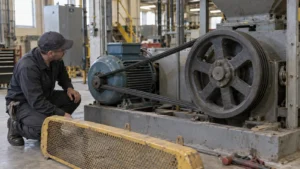
A slipping V-belt is usually replaced first. Sometimes that is all the job needs. But if the new belt squeals on startup, turns shiny, or leaves black dust around the guard within a short time, the belt may only be showing you a fault somewhere else in the drive.
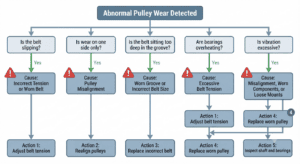
Slippage starts when the torque demand is greater than the grip available between the belt and the pulley. Belt condition matters, but so do the pulley grooves, shaft alignment, mounting parts and actual machine load.
Before fitting another belt, check these three areas.
Safety: Stop and isolate the machine before removing a guard or inspecting the drive. Follow the site’s lockout procedure.
1. Look at the pulley before blaming the belt
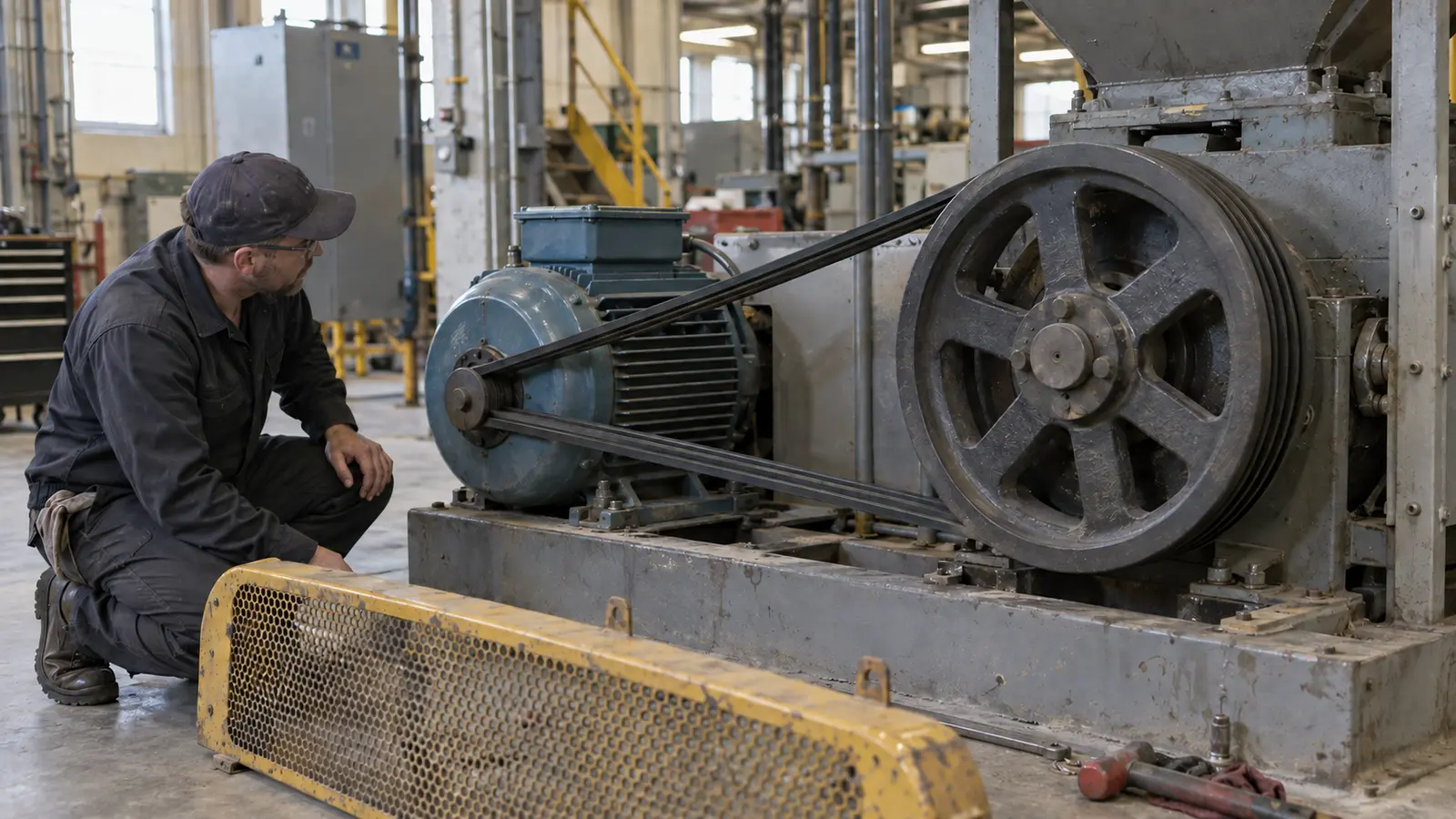
A V-belt carries power through contact with the sides of the pulley groove. It should not be running on the bottom of the groove.
With use, the groove can open up and become rounded or polished. The belt then drops farther into the pulley and loses side contact. A new belt may still feel tight, but it cannot wedge into the groove as intended. The usual result is heat, glazing and another round of slippage.
A belt and pulley mismatch can create the same problem. Profiles that look similar are not necessarily interchangeable. If the groove width or angle is wrong for the belt section, correct tension will not restore proper contact.
Useful clues include:
- The belt sits noticeably lower in one pulley than the other.
- There is a bright contact mark at the bottom of the groove.
- One groove in a multi-groove pulley looks different from the rest.
- A new belt becomes smooth and shiny very quickly.
- Black belt dust returns soon after replacement.
Clean the pulley and inspect the groove faces in good light. A groove gauge is more reliable than judging wear by eye, especially when all the grooves have worn evenly.
2. Check whether the pulleys are actually staying in line
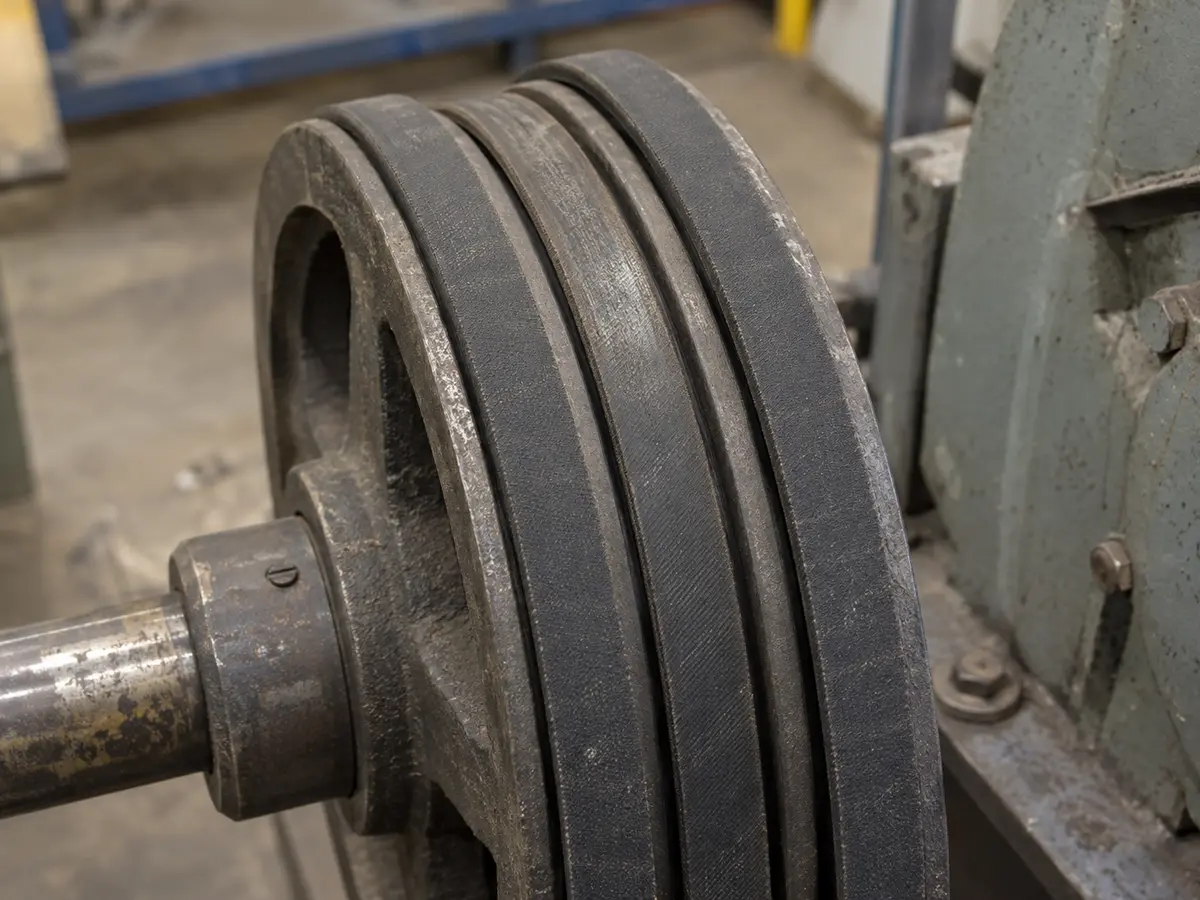
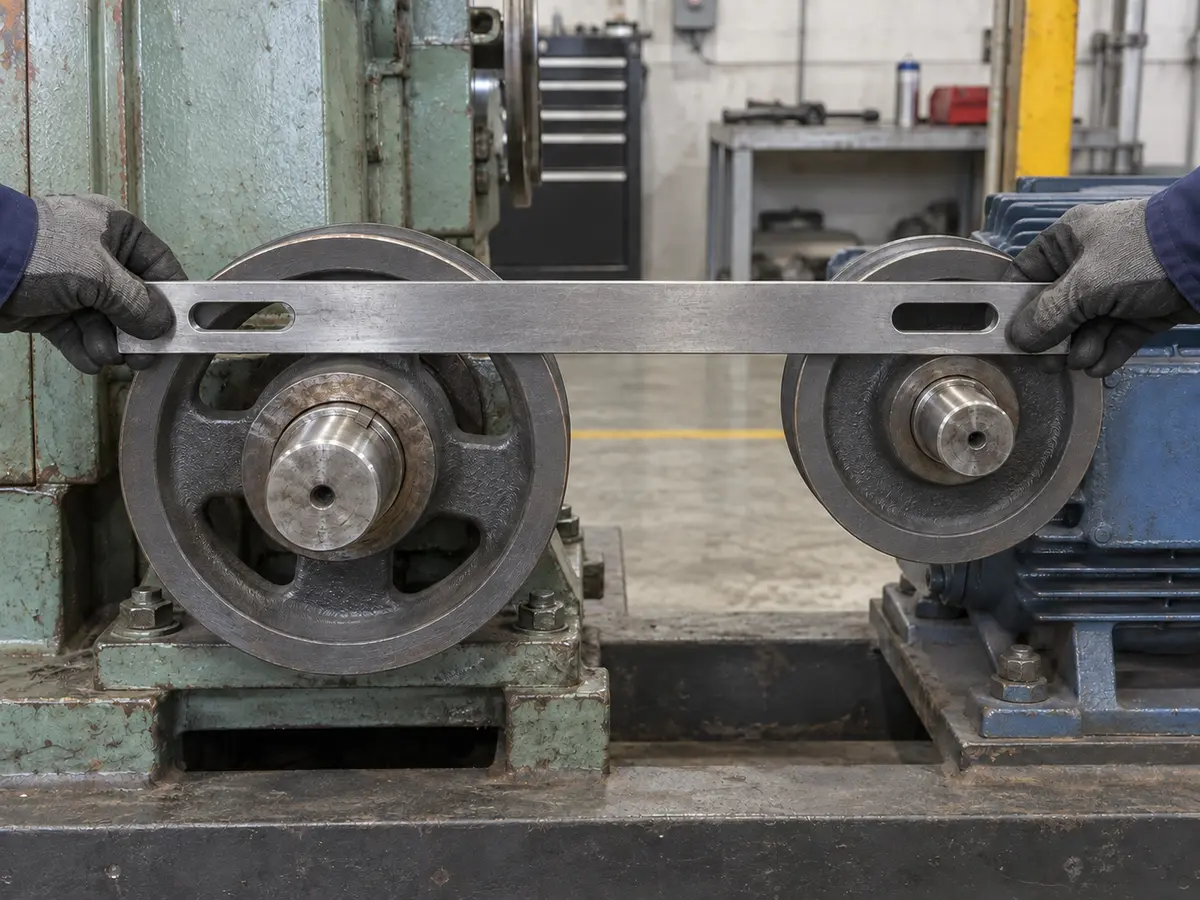
Misalignment is not always obvious. Two pulleys can appear straight from the front while their faces are offset or their shafts sit at a slight angle. The belt then enters the groove sideways, rubs one edge harder than the other and runs hotter than it should.
Alignment can also change after the machine starts. A loose taper bush, bearing play, shaft deflection or movement in the motor base may not be visible during a quick stationary check.
Look for uneven wear across the belt, a polished edge, fretting marks around the bush or hub, and belt dust concentrated on one side of the drive. In a multi-belt set, one belt running hotter than the others is another useful warning sign.
Check both angular and parallel alignment with a straightedge or alignment tool. Then check pulley runout, the taper bush or hub, fasteners, shaft condition and bearing play. If the mounting can move, aligning the pulley once will not solve the problem.
3. Ask what changed in the machine
If the grooves and alignment are sound, look at the duty of the drive. The original belt drive may have worked for years and then started slipping because the job changed—not because the belt suddenly became unsuitable.
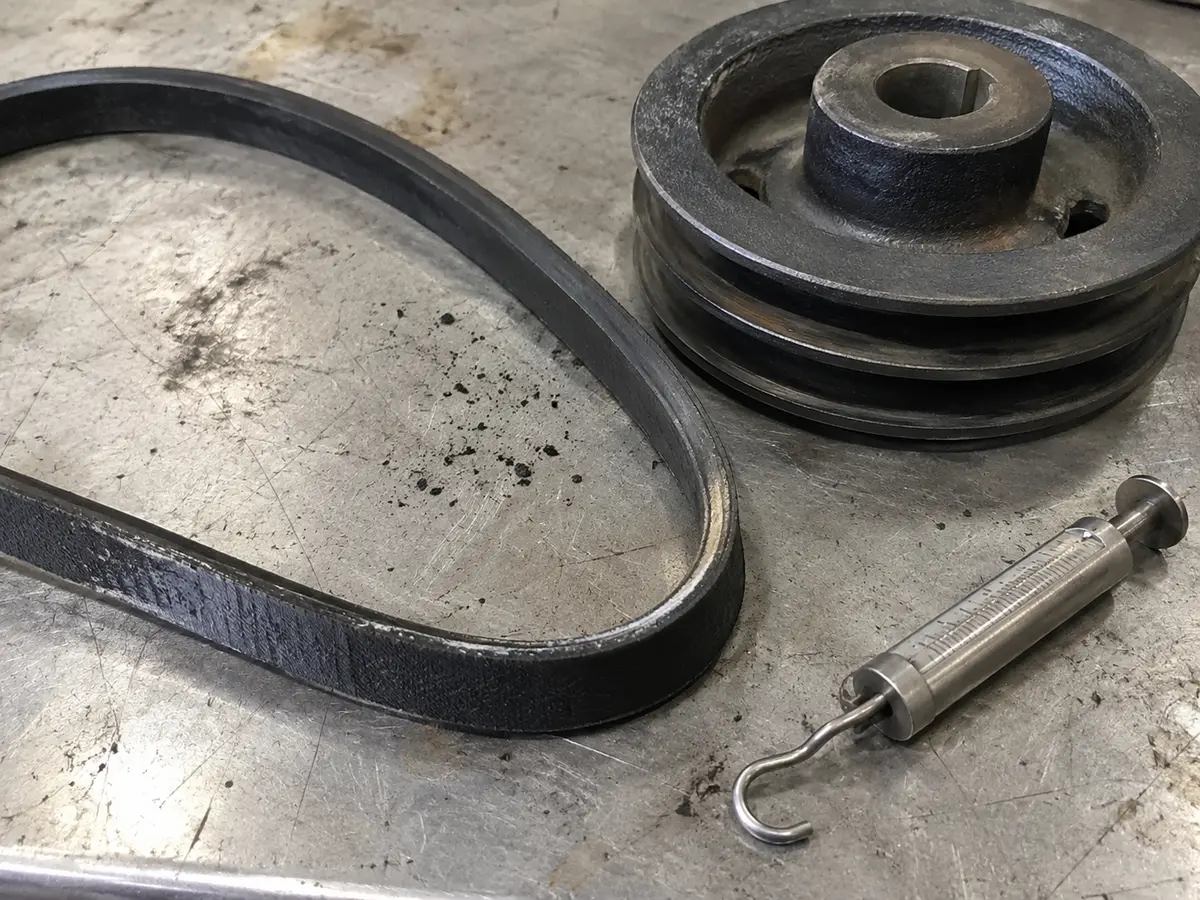
Common changes include a heavier process load, more frequent starts, a blockage in the driven equipment, a modified pulley ratio or a motor replacement with different starting behaviour. Low tension, poor wrap around the smaller pulley, oil or coolant on the drive, and mixing old and new belts can reduce the available grip further.
It is tempting to keep tightening the belt until the noise stops. That can trade one fault for another. Excessive tension increases the load on bearings and shafts, while an overloaded or poorly arranged drive remains unchanged.
Set the tension using the belt manufacturer’s method. If slippage mainly occurs during startup or peak load, compare the present operating conditions with the original design. The drive may need a different belt section, more belts, better wrap or a revised pulley arrangement.
What the symptoms can tell you
| What you see | Where to look first |
|---|---|
| A new belt slips again within days | Groove wear or the wrong belt/pulley profile |
| One edge of the belt is polished | Pulley misalignment or shaft movement |
| One belt in a set runs hotter | Uneven grooves, mismatched belts or unequal loading |
| Slippage happens mainly at startup | Low tension, high starting torque or insufficient drive capacity |
| Slippage began after a process change | Increased load, blockage or a changed duty cycle |
| The belt is glossy and oily | A leak or contamination inside the guard |
A sensible inspection order
There is no need to replace parts at random. Work through the drive in this order:
- Confirm the belt section and, where applicable, that the belts are a matched set.
- Check the pulley grooves for wear, damage and bottom contact.
- Check pulley alignment and runout.
- Check the taper bush or hub, shaft, bearings and mounting bolts.
- Set the belt tension correctly.
- Review the wrap angle, startup conditions and actual driven load.
This usually makes it clear whether the belt caused the trouble or simply suffered from it.
If the problem still points to the pulley, you can send the drive photos and available dimensions for review.
If the pulley may need replacing
For an accurate pulley quotation, the most useful information is:
- Belt section and number of grooves
- Outside diameter or pitch diameter
- Bore size and keyway, or taper-bush size
- Motor power and speed
- A drawing or clear photos of the existing drive
NDS Machinery supplies V-belt pulleys, timing pulleys, taper bushes and other transmission components. If belt slippage keeps returning and the pulley is suspected, send the available dimensions or drawing. We can review the information required for a replacement quotation. Request a replacement pulley quotation.
Frequently asked questions
Can a new V-belt slip?
Yes. A new belt can slip in a worn pulley, on a misaligned drive, with insufficient tension or when the machine requires more torque than the drive can transmit.
Should a V-belt touch the bottom of the groove?
Normally, no. Power is transmitted through the groove sidewalls. Bottom contact often points to groove wear, an incorrect belt section or the wrong pulley profile.
Will extra tension cure the problem?
Only if low tension is the actual cause. Too much tension can shorten bearing life and increase shaft load. Check the grooves, alignment and operating load before tightening further.
Does belt dressing fix slippage?
It may reduce noise for a short time, but it does not repair a worn groove, correct misalignment or increase drive capacity. The underlying cause still needs to be found.